

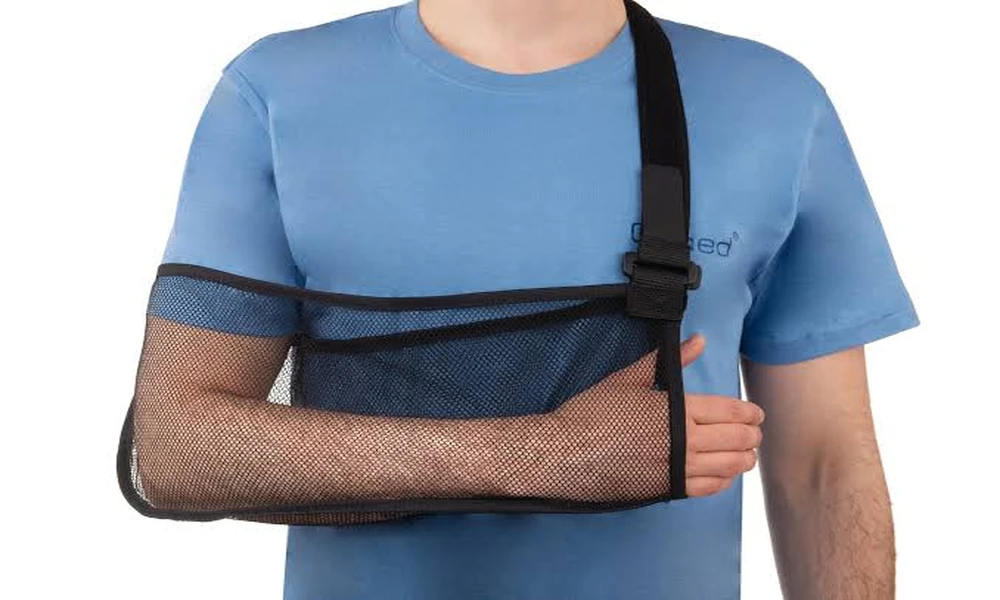
Any user who is healing from an arm, shoulder, elbow or wrist injury, selecting the correct support could be more important for your comfort and speed of recovery. A frequent inquiry revolves around whether to use a pouch arm sling or a standard strap style.
Both slinging devices are employed to immobilize the afflicted area by holding the upper extremity in a particular position to aid in recovery. However, the right choice varies on the injury, the duration of use and the individual’s daily activities.
In this blog, we will know the differences between these two types of slings that can help patients make an informed decision while following medical advice.
Understanding a Pouch Arm Sling
An arm sling pouch helps in providing full support to the forearm and wrist, while a strap passing over the shoulder keeps the arm elevated. This pouch holds the arm securely and distributes its weight evenly. It also reduces strain on the shoulder and neck.
This design ensures your arm is at a comfortable position and restricts any wasted motion which could delay your healing. Slings pouches are generally recommended to cover for shoulder and elbow injuries, fractures, post operative support, severe sprains.
What Is a Standard Strap Sling?
A standard strap sling typically consists of one or more straps which can hold the arm without so much material wrapping around the body of the arm, as compared to the pouch type. In such a sling, you wrap the arm and shoulder straps to keep the arm to put up on.
A standard strap sling has a simple design, often lightweight and easy to wear for short periods. This standard sling is generally used for minor injuries, temporary support or situations where complete immobilization of the body part is not needed.
Better Support and Stability
One major strength when it comes to a pouch arm sling is the stability.
Since the forearm rests inside the fabric pouch, the arm remains in a secure position. This minimizes unnecessary movement of the arm while walking or performing light, everyday tasks.
Standard strap slings generally offer less support as the arm is not held within a full sling. They offer a little more freedom of movement which is perhaps not desired for some injuries, which must be immobilized thoroughly.
Patients recovering from fractures or shoulder surgery often benefit from the greater stability provided by a pouch sling.
Ease of Wearing
Both these slings are generally very easy to wear, although there are some slight differences between them.
The arm sling pouch features adjustable shoulder straps and even has a waist strap so they won’t fall into position while you are moving. It might take a little longer to position it correctly, but once adjusted, it provides a more secure fit.
Whereas, standard strap slings feature very simple design, making them often quicker and easier to put on. However, they might need some frequent adjustment throughout the day to maintain the correct position.
Injury Types Best Suited for a Pouch Arm Sling
A pouch arm sling is generally more suitable for injuries requiring greater support and restricted movement, including:
- Shoulder dislocations
- Collarbone fractures
- Upper arm fractures
- Elbow fractures
- Wrist fractures
- Rotator cuff injuries
- Post-operative shoulder recovery
- Severe ligament injuries
These conditions often require the arm to remain elevated and stable for optimal healing.
When a Standard Strap Sling May Be Enough?
A standard strap sling may be appropriate for less severe injuries such as:
- Minor sprains
- Mild muscle strains
- Temporary arm support
- Short-term pain relief
- Minor soft tissue injuries
Healthcare professionals may also recommend these slings during the early assessment phase before a more supportive device becomes necessary.
Mobility and Independence
Immobilization is key during healing, but that does not mean you need to put the basic daily activities on hold as well.
Arm sling positioning will help your arm to let your hand have available space to allow simple movements for fingers if permitted by a physician.
A standard strap sling helps in allowing slightly more arm movement, especially during certain stages of rehabilitation. However, excessive movement during the initial treatment period could increase discomfort or slow down recovery.
It is all time necessary to follow the medical guidance regarding movement restrictions is always important.
- For several weeks, the fracture or operation may cause one to wear a sling.
- The additional support a pouch sling can provide may assist in lessening muscular fatigue and shoulder and neck strain during a prolonged wear period.
- Proper arm positioning can even promote healthier healing by reducing unintentional movement.
- Standard strap slings are suitable to use on the shortest recovery periods. Or when limited support is requested.
Factors That Needs to Consider Before Choosing
Selecting the right sling actually depends on many following factors, like:
- The type and severity of the injury
- The amount of immobilisation required
- Duration of sling use
- Comfort during extended wear
- Ease of adjustment
- Breathability of the material
- Individual mobility needs
- Medical recommendations
Since the correct sling will differ depending on the individual, a trained expert is an absolute must.
Final Thoughts
The pouch arm sling gives improved security, improved balance and weight distribution, improved comfort, and superior prevention of any undesired mobility. All these particular benefits make it suitable for fractures, surgical recovery and injuries that require extended immobilisation.
However, the standard strap sling has its own importance. It can be an excellent option for minor injuries, short-term support, or situations requiring greater flexibility. It is light and simple to wear. Moreover, provide sufficient assistance for less severe conditions.
Above all, however, the most effective sling is the one advised by your doctor that is most suited to the injury type and the desired treatment outcomes. Getting a good fit and using it as instructed remains crucial.
