

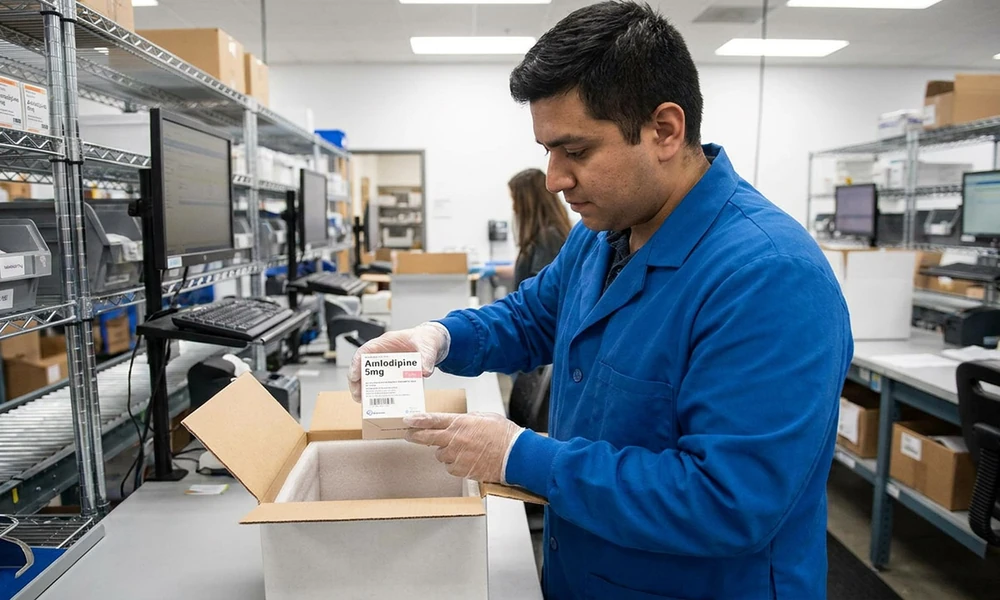
If you live in Arizona or Nevada and your compounded medication is shipped from an out-of-state pharmacy, that pharmacy must hold a non-resident pharmacy license in your state. This licensing requirement exists to make sure a pharmacist is reachable for questions and that labeling and compounding standards meet your state’s rules, so it’s worth confirming before you fill a prescription.
If your prescriber has recommended a compounded medication and your pharmacy is located outside Arizona or Nevada, there’s an important licensing detail worth understanding before your first shipment arrives.
Why Non-Resident Licensing Exists
A license number isn’t paperwork; it’s patient protection.
States require any pharmacy shipping medications to their residents, including compounded prescriptions, to hold a non-resident pharmacy license specific to that state. This requirement exists so state pharmacy boards can hold out-of-state pharmacies to the same accountability standards as local ones, covering things like pharmacist availability for patient counseling, correct labeling, and appropriate compounding practices.
What This Means for Compounded Medications Specifically
Compounding pharmacies often need more than a general non-resident license. Depending on the state and the type of preparation, a nonresident compounding permit, and in some cases a sterile compounding permit, may also be required if the pharmacy is shipping patient-specific compounded formulations across state lines. This extra layer of licensing reflects the more individualized, hands-on nature of compounded preparations compared with standard manufactured drugs.
What to Look for as a Patient
Before filling a compounded prescription with an out-of-state pharmacy, it’s reasonable to ask whether the pharmacy holds a current non-resident license for Arizona or Nevada specifically, since holding a license in its home state alone isn’t sufficient. A properly licensed pharmacy should also provide a toll-free number so you can reach a pharmacist with questions about your medication, which is typically a licensing requirement in itself.
What to Expect on Your Label
Properly labeled compounded medications shipped across state lines typically include the pharmacy’s name and address, your prescriber’s information, your name, directions for use, the medication name and strength, a serial or lot number, and a beyond-use date. Reviewing this information when your medication arrives is a simple way to confirm your pharmacy is following the standards your state requires.
Working With a Multi-State Licensed Pharmacy
King’s Pharmacy and Compounding Center is licensed to serve patients in Arizona, Nevada, and several other states beyond California, allowing patients who’ve moved or who work with a California-based prescriber to continue receiving their compounded medications without interruption.
If you’re an Arizona or Nevada patient with a compounded prescription, Contact King’s Pharmacy at 949.387.0780 or Request a Refill to confirm shipping to your state.
This content is for informational purposes only and is not a substitute for professional medical or legal advice. Compounded medications require a valid prescription from a licensed prescriber.
FAQ
Do out-of-state pharmacies need a special license to ship to Arizona or Nevada? Yes, any pharmacy shipping medications to residents of a state, including compounded prescriptions, generally must hold a non-resident pharmacy license specific to that state.
Is a non-resident pharmacy license different from a compounding permit? Often yes. Depending on the state and the type of preparation, a pharmacy may need both a non-resident pharmacy license and a separate nonresident compounding permit to ship compounded formulations.
What should I check before filling a compounded prescription with an out-of-state pharmacy? Confirm the pharmacy holds a current non-resident license for your specific state and that it provides a toll-free number to reach a pharmacist with questions.
What information should appear on a shipped compounded medication label? Typically, the prescription includes the pharmacy’s name and address, prescriber and patient information, directions for use, drug name and strength, a serial number, and a beyond-use date.
Is King’s Pharmacy licensed to ship to Arizona and Nevada? Yes, King’s Pharmacy and Compounding Center is licensed to serve patients in Arizona, Nevada, and several other states in addition to California.
